Practicing present perfect

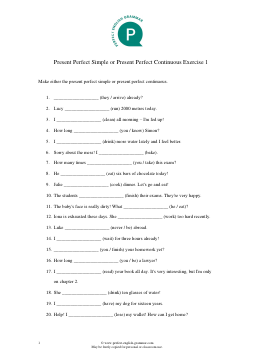
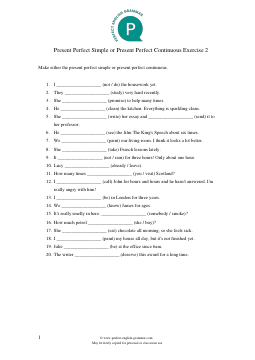
Práctica del presente perfecto simple y continuo mediante preguntas sobre duración, actividades recientes, experiencias y situaciones de convivencia. Se reforzó el orden de las preguntas, el uso de participios y la forma have/has been + verbo-ing.

Resumen

In this lesson you practiced present perfect and present perfect continuous in short examples and personal answers. You worked on forming questions and short answers, and the tutor corrected verb forms, timing expressions, and sentence order as the lesson progressed.

Present perfect continuous practice

  • Practiced sentences like 'I have been cleaning all morning' with timing phrases
  • Corrected question forms: 'How long have you been...?' and short answers
  • Focused on expressing recent activities and duration accurately

Present perfect simple practice

  • Worked on 'I have lost my wallet' and correct past participles usage
  • Compared simple and continuous: 'I have cooked' versus 'has been cooking'
  • Tutor corrected verb choices: 'taken' not 'take' or 'took' in questions

Speaking about living situations

  • Discussed living alone versus with others using present tenses
  • Practiced answers: 'I like to live alone because...' with reasons
  • Worked on fluency and sentence order; tutor gave pronunciation help

Para recordar

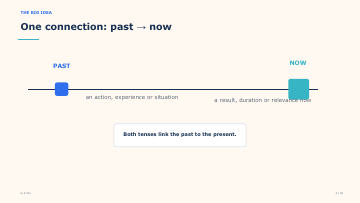
Present perfect vs Present perfect continuous

The present perfect is used for actions completed at an unspecified time or with present relevance; the present perfect continuous emphasizes the duration or ongoing nature of an action that started in the past and continues to the present. Ejemplos

  • I have cleaned all morning.
  • I have been drinking more water lately.
Apuntes de la clase en español

Correcciones, pronunciación y práctica preparadas a partir de esta clase. No las escribió tu profesora.

Para repasar

  • Contrastar resultado (I have lost my wallet) con actividad (I've been drinking more water).
  • Automatizar preguntas como How long have you been…? y What has he been eating?.
  • Repasar participios irregulares: run, known, taken, drunk, had.
  • Practicar la pronunciación de present perfect continuous, think, normal y exhausted.

Tarea

Completar los ejercicios 5 y 6 indicados en clase.

Vocabulario

12 palabras
present perfect continuouspresente perfecto continuoExpressionB1

A grammatical tense used to describe actions that began in the past and are still continuing or have recently stopped, emphasizing the duration or ongoing nature of the action.

En tu lección

From your lesson: “Present perfect. Present perfect continuous.”

Otro ejemplo

She has been studying English for three hours.

half cleanmedio limpioExpressionA2

Partially clean; not completely free from dirt or impurities.

En tu lección

From your lesson: “She supposed say half cleaned. A half cleaning?”

Otro ejemplo

The windows were only half clean, so the sunlight still struggled to come through.

have been drinkhaber bebidoExpressionB1

A phrase used to indicate that someone has consumed alcoholic beverages in the past and the effects or consequences of that consumption may still be relevant.

En tu lección

From your lesson: “I have I have drink I have been drinking more water.”

Otro ejemplo

He has been drink for several hours and is now feeling dizzy.

anotherotroDeterminerA1

One more person or thing of the same type as already mentioned or known.

En tu lección

From your lesson: “Another. Okay. Another is singular.”

Otro ejemplo

Would you like another cup of tea?

exhaustedagotadoAdjectiveB1

Extremely tired; having no energy left due to physical or mental effort.

En tu lección

From your lesson: “She Iona is exhausted this day.”

Otro ejemplo

After running the marathon, she felt exhausted.

bakehornearVerbA1

To cook food by dry heat, especially in an oven.

En tu lección

From your lesson: “I have I have been baking.”

Otro ejemplo

I like to bake cookies on the weekend.

normalnormalAdjectiveA2

Conforming to a standard, usual, or expected state or condition; typical or ordinary.

En tu lección

From your lesson: “Is it normal with with other people who are not their family?”

Otro ejemplo

It is normal to feel nervous before an exam.

supportapoyoNounA2

The act of helping or giving assistance to someone or something.

En tu lección

From your lesson: “I am support in support Olympias.”

Otro ejemplo

She received a lot of support from her friends during the difficult time.

alonesoloAdjectiveA2

Having no one else present; being by oneself.

En tu lección

From your lesson: “I like to be alone.”

Otro ejemplo

She was alone in the house all night.

sharecompartirVerbB1

To have or use something at the same time as someone else.

En tu lección

From your lesson: “Do people in your country usually share a house or flat with other people who are not their family?”

Otro ejemplo

We share the same birthday.

cookcocinarVerbA1

To prepare food by heating it, such as by boiling, baking, frying, or roasting.

En tu lección

From your lesson: “Julie has been cooking.”

Otro ejemplo

I like to cook dinner for my family every night.

finishterminarVerbA2

To bring something to an end or completion.

En tu lección

From your lesson: “Have you finished your?”

Otro ejemplo

I will finish my homework before dinner.

Materiales de la clase

4 PDF

Progreso

Las cifras de esta clase, comparadas con todas tus lecciones.

Vocabulario acumulado

1.298 palabras +32 respecto de la clase anterior

Palabras nuevas

32 palabras +17 respecto de la clase anterior

Palabras habladas

686 palabras +355 respecto de la clase anterior

Variedad de vocabulario

13 puntos +4 respecto de la clase anterior

Ritmo al hablar

51 palabras/min +9 respecto de la clase anterior

Tiempo hablando

24 min +10 respecto de la clase anterior

56% del tiempo de conversación

Feedback

Volvé a escuchar tu pronunciación

Lo que hiciste bien

Tu próximo paso

Otras formas de decirlo

Dijiste...Sorry about the mess.

ProbáSorry about the clutter.

Has utilizado la palabra 'mess' en esta frase. ¡Considera la posibilidad de utilizar el término 'clutter' para enriquecer tu vocabulario!

Dijiste...Because I am relaxed.

ProbáBecause I am calm.

Has utilizado la palabra 'relaxed' en esta frase. ¡Considera la posibilidad de utilizar el término 'calm' para enriquecer tu vocabulario!

Notas de repaso

7 notas
  1. TrabajoPregunta: ¿Desde hace cuánto eres abogada?Ver respuestaOcultar respuesta

    Respuesta

    How long have you been a lawyer?

    Por qué
    How long + present perfect pregunta por una situación que empezó en el pasado y continúa ahora.
    Un ejemplo
    How long have you lived here?
    Pronunciación
    /haʊ lɔŋ həv ju bɪn ə ˈlɔɪɚ/
    • a2
    • preply
    • present perfect
    • questions
    • work
  2. Inglés cotidianoCorrige: What has been he eat?Ver respuestaOcultar respuesta

    Respuesta

    What has he been eating?

    Por qué
    En la pregunta, has va antes del sujeto; después usamos been + verbo en -ing.
    Un ejemplo
    What have you been doing?
    Pronunciación
    /wʌt həz hi bɪn ˈitɪŋ/
    • a2
    • correction
    • preply
    • present perfect continuous
    • questions
  3. Inglés cotidianoTraduce: He estado tomando más agua.Ver respuestaOcultar respuesta

    Respuesta

    I've been drinking more water.

    Otra forma de decirlo
    I have been drinking more water.
    Por qué
    Have been + verbo en -ing enfatiza una actividad reciente o continua.
    Un ejemplo
    I've been sleeping better.
    Pronunciación
    /aɪv bɪn ˈdrɪŋkɪŋ mɔr ˈwɑt̬ɚ/
    • a2
    • health
    • preply
    • present perfect continuous
  4. Inglés cotidianoTraduce: He perdido mi billetera.Ver respuestaOcultar respuesta

    Respuesta

    I have lost my wallet.

    Otra forma de decirlo
    I've lost my wallet.
    Por qué
    El presente perfecto simple destaca el resultado actual: ahora no tengo la billetera.
    Un ejemplo
    I've lost my keys.
    Pronunciación
    /aɪ həv lɔst maɪ ˈwɑlət/
    • a2
    • everyday
    • preply
    • present perfect
    • results
  5. Inglés cotidianoDi que Julie ha estado cocinando, enfocándote en la actividad.Ver respuestaOcultar respuesta

    Respuesta

    Julie has been cooking.

    Por qué
    Has been cooking enfatiza la actividad o su duración, no solo el resultado.
    Un ejemplo
    The kitchen smells great.
    Pronunciación
    /ˈdʒuli həz bɪn ˈkʊkɪŋ/
    • a2
    • cooking
    • preply
    • present perfect continuous
  6. Vida cotidianaPregunta por una experiencia: ¿Alguna vez has tenido una compañera de piso que no lavaba los platos?Ver respuestaOcultar respuesta

    Respuesta

    Have you ever had a roommate who didn't wash the dishes?

    Por qué
    Have you ever had pregunta por una experiencia; roommate es la opción habitual en inglés estadounidense.
    Un ejemplo
    I've never had a messy roommate.
    Pronunciación
    /həv ju ˈɛvɚ hæd ə ˈrumˌmeɪt hu ˈdɪdənt wɑʃ ðə ˈdɪʃɪz/
    • a2
    • en us
    • home
    • preply
    • present perfect
    • roommates
  7. Vida cotidianaTraduce: No soporto una casa sucia.Ver respuestaOcultar respuesta

    Respuesta

    I can't stand a dirty house.

    Otra forma de decirlo
    I cannot stand a dirty house.
    Por qué
    Can't stand expresa que algo resulta muy molesto o intolerable.
    Un ejemplo
    I can't stand clutter.
    Pronunciación
    /aɪ kænt stænd ə ˈdɝti haʊs/
    • a2
    • conversation
    • home
    • preferences
    • preply
Practicar tipeando

7 tarjetas para escribir en inglés, letra por letra.

Descargar Anki

14 tarjetas con audio.