Discussing inventions and people

Celeste practicó cómo hablar de inventos, personas influyentes y lugares vinculados con cambios importantes. La conversación reutilizó cláusulas relativas con who, which, that, whose, where y when, y terminó con ejemplos de condicional cero y primer condicional.

Resumen

In this lesson you practiced talking about inventions, influential people, and places that changed the world. The tutor guided you through vocabulary and short descriptions while correcting pronunciation and word choice. You worked on forming simple sentences and identifying examples from science, technology, and activism.

Inventions that changed the world

  • Discussed examples: antibiotics, the Internet, computers, and rockets
  • Practiced simple sentences: "One invention that changed the world is..."
  • Corrected pronunciation for key words like "antibiotics" and "Silicon Valley"
People who influence others

  • Named scientists, activists, and tech leaders as inspiring figures
  • Practiced phrases: "A person who influenced many people is..."
  • Tutor corrected word choice and helped you expand short answers

Places and times of change

  • Mentioned NASA, Silicon Valley, Rome and times like war and space travel
  • Described places: "A place where important discoveries are made is..."
  • Worked on clarity and sentence structure for descriptions

Para recordar

Relative clauses

Relative clauses provide extra information about a noun using who, which, or that to connect clauses. Ejemplos

  • The scientist who developed antibiotics saved millions of lives.
  • The Internet, which connects billions of people, has changed how we live.
Apuntes de la clase en español

Correcciones, pronunciación y práctica preparadas a partir de esta clase. No las escribió tu profesora.

Correcciones principales

  • The Internet, which connects billions of people, has changed the way we live.: se añadieron las comas de la cláusula no definitoria y se sustituyó how we life por the way we live.
  • One invention that changed the world is the computer.: se corrigió word por world y se añadió el artículo the.
  • Education around the world has influenced many young people.: después de has se necesita el participio influenced.
  • A person whose ideas influence many people is influential.: la frase necesitaba un predicado para quedar completa.
  • A time when the world changed a lot was the war.: una guerra concreta requiere the y minúscula en este contexto.

Pronunciación

Preply destacó college, medicine, teacher y children. La prioridad de repaso es children /\u02c8t\u0283\u026aldrən/, que obtuvo la puntuación más baja de las cuatro muestras.

Práctica y tarea

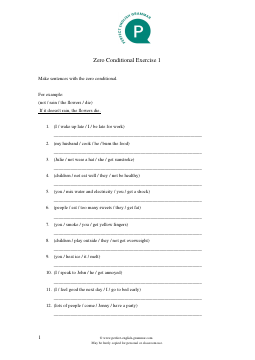
  • En el chat se practicó el condicional cero: If the food is outside the fridge, it goes bad.
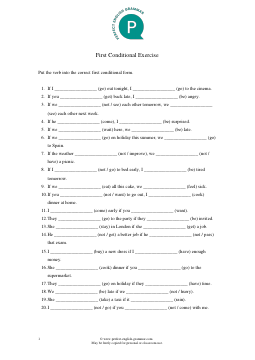
  • También se practicó el primer condicional: She will be upset if you don't tell her. y su forma negativa con won't.
  • La tutora envió Zero_Conditional_Practice.pdf (dos páginas) y first_conditional_practice.pdf (una página). Ambos originales se conservaron, se inspeccionaron visualmente y tienen una extracción de texto buscable.

Alineación con el plan

La fecha corresponde a la semana 5 del plan activo. Las cláusulas relativas y los condicionales se conservan porque forman parte de la clase verificada, pero se tratan como ampliación opcional y no como requisito para avanzar de nivel.

Vocabulario

22 palabras
antibioticantibióticoNounB1

A medicine or substance that is used to kill bacteria or stop their growth, especially to treat infections in humans and animals.

En tu lección

From your lesson: “Antibiotic. Come on. Antibiotics.”

Otro ejemplo

The doctor prescribed an antibiotic for my throat infection.

the InternetInternetExpressionA2

A global computer network providing a variety of information and communication facilities, consisting of interconnected networks using standardized communication protocols.

En tu lección

From your lesson: “F four. The Internet, which connects billions of people has changed how we life live.”

Otro ejemplo

I found the information I needed on the Internet.

rightderechoNounA2

A moral or legal entitlement to have or do something.

En tu lección

From your lesson: “The activist who fight for equal are right, comma, equal equal rights, inspire, a new generation.”

Otro ejemplo

Everyone has the right to free speech.

educationeducaciónNounA2

The process of receiving or giving systematic instruction, especially at a school or university.

En tu lección

From your lesson: “My lawyer who speaks about education or why it comma? A two a education. Education worldwide has influence influence”

Otro ejemplo

Education is important for personal growth.

Silicon ValleySilicon ValleyExpressionB2

The technology industry or community associated with Silicon Valley, often referring to the collective companies, culture, and economic activities related to tech innovation.

En tu lección

From your lesson: “Silicon Silicon. Come on. Silicon Silicon Valley, where many tech companies are bus base trucks based.”

Otro ejemplo

The latest trends in artificial intelligence are often driven by Silicon Valley.

computercomputadoraNounA1

An electronic device that stores, processes, and retrieves data, typically for calculations, communication, or entertainment.

En tu lección

From your lesson: “One invention that changed the word is computer. It's computer. Are computers? Okay. Computers.”

Otro ejemplo

I use my computer to write emails every day.

warcampañaNounB2

A sustained effort or campaign to deal with or end a particular problem or situation (often used metaphorically, e.g., 'war on drugs').

En tu lección

From your lesson: “A time when the world changed a lot was War. War. Drug security? War. War.”

Otro ejemplo

The government declared a war on poverty.

medicinemedicinaNounB2

A field of study or profession concerned with maintaining health and treating illness, especially as practiced by doctors and nurses.

En tu lección

From your lesson: “I I respect people who work in medicine.”

Otro ejemplo

He works in medicine as a surgeon.

AIinteligencia artificialProper NounB2

An abbreviation for 'artificial intelligence,' referring to the field of computer science focused on creating machines or software that can perform tasks typically requiring human intelligence.

En tu lección

From your lesson: “One thing that improves people life is lives is? Life is? Ah, a hit. Improves. Okay. Okay. AI.”

Otro ejemplo

AI is transforming the way we work and live.

solutionsoluciónNounA2

An answer to a problem, question, or puzzle.

En tu lección

From your lesson: “How do you mean solve solve problem. Solution. Oh, yes.”

Otro ejemplo

She found a solution to the math problem.

climate changecambio climáticoNounB1

A long-term alteration in the average weather patterns of a region or the entire planet, especially as a result of human activity.

En tu lección

From your lesson: “It's activists who are holding signs are protesting against climate change.”

Otro ejemplo

Climate change is causing more frequent heatwaves.

devicedispositivoNounA2

An object, machine, or piece of equipment made for a particular purpose, especially an electronic or mechanical one.

En tu lección

From your lesson: “Phones are device that are devices that allow allow allow people to communicate and access information.”

Otro ejemplo

She bought a new device to track her fitness.

collegecolegioNounC1

A group of people with a shared profession, purpose, or interest, often forming an official body or society (historical or formal use).

En tu lección

From your lesson: “The one whose presentation is about invest investment investment investing is talking with her college college College.”

Otro ejemplo

The college of cardinals met to elect a new pope.

produceproducirVerbB1

To cause a particular result or effect to happen.

En tu lección

From your lesson: “The rocket which is flying into space is production production a lot of smoke. Producing a lot of smoke.”

Otro ejemplo

The new law will produce positive changes.

teacherprofesorNounA1

A person whose job is to help students learn in a school, college, or university.

En tu lección

From your lesson: “The teacher who is writing on the board is teaching the children.”

Otro ejemplo

The teacher explained the lesson to the class.

runnercorredorNounA2

A person who runs, especially as a sport or for exercise.

En tu lección

From your lesson: “The runner runner whose race was 2,000 meters has finished.”

Otro ejemplo

The runner crossed the finish line first.

activistactivistaNounB1

A person who takes action to support or oppose a cause, especially as part of a campaign for social or political change.

En tu lección

From your lesson: “The activist who fight for equal rights inspire a new generation.”

Otro ejemplo

The activist organized a protest against climate change.

influenceinfluenciaNounB1

The power or ability to affect how someone thinks or behaves, or how something develops.

En tu lección

From your lesson: “Education worldwide has influence many young people.”

Otro ejemplo

Her influence on the team was obvious.

innovationinnovaciónNounB2

The introduction of something new, such as an idea, method, or device.

En tu lección

From your lesson: “A place where important discoveries are made is a center of innovation.”

Otro ejemplo

The company's success is built on constant innovation.

acquiredadquiridoAdjectiveC1

(Medical) Developed after birth, not inherited or congenital, often referring to diseases or conditions.

En tu lección

From your lesson: “ASDE acquired deficit syndrome.”

Otro ejemplo

He was diagnosed with an acquired heart condition.

improvemejorarVerbA2

To make something better or to become better in quality, condition, or value.

En tu lección

From your lesson: “One thing that improves people life is?”

Otro ejemplo

She wants to improve her English skills.

investmentinversiónNounB1

The money, effort, or time that is put into something to achieve a result or gain a profit.

En tu lección

From your lesson: “The one whose presentation is about investment is talking with her college.”

Otro ejemplo

The investment in new technology improved productivity.

Materiales de la clase

2 PDF

Progreso

Las cifras de esta clase, comparadas con todas tus lecciones.

Vocabulario acumulado

1.597 palabras +75 respecto de la clase anterior

Palabras nuevas

75 palabras −33 respecto de la clase anterior

Palabras habladas

666 palabras −390 respecto de la clase anterior

Variedad de vocabulario

23 puntos +4 respecto de la clase anterior

Ritmo al hablar

42 palabras/min −12 respecto de la clase anterior

Tiempo hablando

23 min −1 respecto de la clase anterior

51% del tiempo de conversación

Feedback

Volvé a escuchar tu pronunciación

Lo que hiciste bien

Tu próximo paso

Otras formas de decirlo

Dijiste...No.

ProbáNope.

Has utilizado la palabra 'No' en esta frase. ¡Considera la posibilidad de utilizar el término 'Nope' para enriquecer tu vocabulario!

Dijiste...Instantly transform the word.

ProbáInstantly convert the word.

Has utilizado la palabra 'transform' en esta frase. ¡Considera la posibilidad de utilizar el término 'convert' para enriquecer tu vocabulario!

Dijiste...A time when the world changed a lot was War.

ProbáA time when the world altered a lot was War.

Has utilizado la palabra 'changed' en esta frase. ¡Considera la posibilidad de utilizar el término 'altered' para enriquecer tu vocabulario!

Notas de repaso

6 notas
  1. Inglés cotidianoCorrige: The Internet, which connects billions of people, has changed how we life.Ver respuestaOcultar respuesta

    Respuesta

    The Internet, which connects billions of people, has changed the way we live.

    Por qué
    The way we live significa 'la manera en que vivimos'. La cláusula con which añade información y va entre comas.
    Un ejemplo
    Technology has changed the way we work.
    Pronunciación
    /ði ˈɪntɚˌnɛt, wɪtʃ kəˈnɛkts ˈbɪljənz əv ˈpipəl, hæz tʃeɪndʒd ðə weɪ wi lɪv/
    • a2
    • correction
    • optional
    • preply
    • relative clauses
    • week 5
  2. Inglés cotidianoCorrige: One invention that changed the word is computer.Ver respuestaOcultar respuesta

    Respuesta

    One invention that changed the world is the computer.

    Por qué
    World significa 'mundo'. Para hablar del invento como categoría usamos the computer.
    Un ejemplo
    The computer changed the way people work.
    Pronunciación
    /wʌn ɪnˈvɛnʃən ðæt tʃeɪndʒd ðə wɝrld ɪz ðə kəmˈpjutɚ/
    • a2
    • articles
    • correction
    • optional
    • preply
    • vocabulary
    • week 5
  3. Inglés cotidianoCompleta con el participio: Education around the world has ___ many young people. (influence)Ver respuestaOcultar respuesta

    Respuesta

    Education around the world has influenced many young people.

    Por qué
    Después de has usamos el participio: influence cambia a influenced.
    Un ejemplo
    Her work has influenced many students.
    Pronunciación
    /ˌɛdʒəˈkeɪʃən əˈraʊnd ðə wɝrld hæz ˈɪnfluənst ˈmɛni jʌŋ ˈpipəl/
    • a2
    • correction
    • optional
    • participle
    • preply
    • present perfect
    • week 5
  4. ComidaDi: Si la comida está fuera del refrigerador, se echa a perder.Ver respuestaOcultar respuesta

    Respuesta

    If the food is outside the fridge, it goes bad.

    Otra forma de decirlo
    When the food is outside the fridge, it goes bad.
    Por qué
    El condicional cero expresa un resultado habitual: presente simple en las dos partes.
    Un ejemplo
    If you heat ice, it melts.
    Pronunciación
    /ɪf ðə fud ɪz ˌaʊtˈsaɪd ðə frɪdʒ, ɪt ɡoʊz bæd/
    • a2
    • food
    • optional
    • preply
    • week 5
    • zero conditional
  5. Inglés cotidianoCompleta: She ___ upset if you don't tell her. (will)Ver respuestaOcultar respuesta

    Respuesta

    She will be upset if you don't tell her.

    Otra forma de decirlo
    She'll be upset if you don't tell her.
    Por qué
    El primer condicional usa will en el resultado y presente simple después de if.
    Un ejemplo
    She won't be upset if you tell her.
    Pronunciación
    /ʃi wɪl bi ʌpˈsɛt ɪf ju doʊnt tɛl hɚ/
    • a2
    • contraction
    • first conditional
    • optional
    • preply
    • week 5
  6. Inglés cotidianoPronuncia y di en inglés: niños.Ver respuestaOcultar respuesta

    Respuesta

    children

    Por qué
    Children tiene dos sílabas y termina en /drən/; no se pronuncia como tres sílabas separadas.
    Un ejemplo
    The teacher is teaching the children.
    Pronunciación
    /ˈtʃɪldrən/
    • a1
    • family
    • preply
    • pronunciation
    • week 5
Practicar tipeando

6 tarjetas para escribir en inglés, letra por letra.

Descargar Anki

12 tarjetas con audio.