 Abrir en Preply
Plans and timetables
- Practiced sentences with 'going to' for future plans and intentions
- Stated specific appointments and departure times (06:30, 11:45, 08:15)
- Practiced offering help and immediate future actions (I will help you)
Celeste practicó formas para hablar de planes, horarios y decisiones futuras y avanzó al segundo condicional para situaciones hipotéticas. La conversación incluyó viajes, ganar la lotería y la estructura If I were..., I would....
Practicing conditionals and plans
Con Alianna J.
In this lesson you practiced talking about plans and unreal situations using future and conditional ideas. The tutor guided you through examples (plans: 'going to', timetables; unreal: 'if I were...', 'I would...') and corrected sentence forms and pronunciation. The lesson moved from schedules and plans to conditional/hypothetical sentences with repeated practice and corrections.
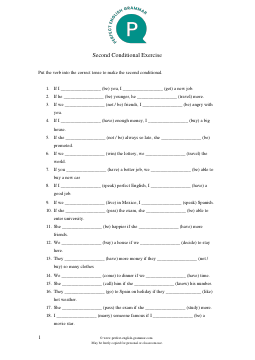
The second conditional is used to talk about hypothetical or unreal situations in the present or future. It uses 'if' + past simple, and 'would' + base verb in the main clause. Ejemplos
Correcciones, pronunciación y práctica preparadas a partir de esta clase. No las escribió tu profesora.
If I won the lottery, I would travel a lot.: se usa the lottery y la expresión natural a lot.If I were rich, I'd go on a cruise.: go on a cruise es la combinación natural y I'd contrae I would.I think people will lose less money in the future. apareció como sugerencia de Preply; se conserva como evidencia, pero no se convirtió en tarjeta porque cash también puede ser correcto según el significado.Preply destacó cruise, score, lottery y travel. La prioridad es cruise /kruz/, que obtuvo la puntuación más baja.
If I could live anywhere, I would... y la serie irregular steal–stole–stolen.La fecha corresponde a la semana 5 del plan activo. Las formas de futuro, el segundo condicional y la voz pasiva se conservan porque forman parte de la evidencia de la clase, pero se tratan como ampliación opcional y no como requisito del núcleo semanal.
To express regret for something that one has done wrong or for a mistake.
En tu lección
From your lesson: “If I were you, I could Apollo. I would apologize.”
Otro ejemplo
I apologize for being late to the meeting.
An arrangement to meet someone at a particular time and place, often for a professional or official purpose.
En tu lección
From your lesson: “My dentist appointment is at ten tomorrow.”
Otro ejemplo
I have a doctor's appointment at 3 p.m.
To take pleasure or find satisfaction in something.
En tu lección
From your lesson: “I am sure you will enjoy your new job.”
Otro ejemplo
I enjoy reading books in my free time.
To go from one place to another, typically over a distance, for any purpose such as work, leisure, or exploration.
En tu lección
From your lesson: “If I won the lottery, I would like to travel for a year.”
Otro ejemplo
I love to travel to new countries every year.
A journey on a ship taken for pleasure, usually with stops at various ports.
En tu lección
From your lesson: “If I were rich, I would like to go on a cruise.”
Otro ejemplo
We went on a cruise around the Caribbean last summer.
The branch of science and technology concerned with the design, building, and use of engines, machines, and structures.
En tu lección
From your lesson: “If I were you, I would study engineering.”
Otro ejemplo
She decided to study engineering at university.
Many times; frequently; on many occasions.
En tu lección
From your lesson: “If she lived closer, we could meet more often.”
Otro ejemplo
She often goes to the gym after work.
A game of chance in which people buy numbered tickets and prizes are given to those whose numbers are drawn at random.
En tu lección
From your lesson: “If I won the lottery, I would travel around the world.”
Otro ejemplo
She bought a lottery ticket every week hoping to win big.
The number of points, goals, runs, or similar units gained in a game, competition, or test.
En tu lección
From your lesson: “Now look at the score.”
Otro ejemplo
The final score was 3-2.
Las cifras de esta clase, comparadas con todas tus lecciones.
Vocabulario acumulado
1.668 palabras +26 respecto de la clase anterior
Palabras nuevas
26 palabras −19 respecto de la clase anterior
Palabras habladas
479 palabras −370 respecto de la clase anterior
Variedad de vocabulario
13 puntos −5 respecto de la clase anterior
Ritmo al hablar
57 palabras/min −10 respecto de la clase anterior
Tiempo hablando
19 min −1 respecto de la clase anterior
43% del tiempo de conversación
Los comentarios y ejemplos están en inglés estadounidense. Próximamente añadiremos más variantes.
... the cruise on ...
Tu pronunciación · 0,8 s
Pronunciación de ejemplo · 0,9 s
... the score.
Tu pronunciación · 0,7 s
Pronunciación de ejemplo · 0,8 s
... a lottery a ...
Tu pronunciación · 0,6 s
Pronunciación de ejemplo · 0,9 s
... meet, travel we ...
Tu pronunciación · 0,6 s
Pronunciación de ejemplo · 1 s
Dijiste
...If I could live anywhere, I would live in Germany.
Great job with the modal verb 'could' in this conditional sentence. You're showing a strong grasp of English!
Dijiste
...Martha bought some running shoes yesterday.
Perfect! Your use of the simple past tense is spot on. Keep up the excellent work!
Dijiste
...I am sure you will enjoy your new job.
Well done! Your use of 'am sure' expresses certainty clearly. Keep up the great work!
Dijiste
...If someone is at the door, I will open it.
Great job with subject-verb agreement in this conditional sentence. You're mastering complex structures!
Dijiste
...If I were you, I would study engineering.
Excellent! Your use of the subjunctive 'were' in this hypothetical conditional is perfect. You're truly understanding advanced grammar!
Dijiste
...I think people will lose less cash in the future.
Una alternativa
I think people will lose less money in the future.
Replaced "cash" with the more natural general term "money."
Dijiste
...If I won a lottery, I would travel by quote.
Una alternativa
If I won the lottery, I would travel a lot.
Fixed the article ("the lottery") and replaced the unclear phrase "by quote" with a natural expression "a lot."
Dijiste
...If I were rich, I would like cruise.
Una alternativa
If I were rich, I'd go on a cruise.
Added the correct infinitive structure "go on" and the article "a" for a natural phrasing; contracted "I would" to "I'd" for colloquial tone.
Dijiste...Be careful with that plate.
ProbáBe cautious with that plate.
Has utilizado la palabra 'careful' en esta frase. ¡Considera la posibilidad de utilizar el término 'cautious' para enriquecer tu vocabulario!
Dijiste...Martha bought some running shoes yesterday.
ProbáMartha purchased some running shoes yesterday.
Has utilizado la palabra 'bought' en esta frase. ¡Considera la posibilidad de utilizar el término 'purchased' para enriquecer tu vocabulario!
Dijiste...So we should leave now.
ProbáSo we should depart now.
Has utilizado la palabra 'leave' en esta frase. ¡Considera la posibilidad de utilizar el término 'depart' para enriquecer tu vocabulario!
Respuesta
If I won the lottery, I would travel a lot.
Respuesta
If I were rich, I'd go on a cruise.
Respuesta
cruise
Respuesta
steal – stole – stolen
3 tarjetas para escribir en inglés, letra por letra.
8 tarjetas con audio.