
Present simple and subject pronouns

Con Justin Anthony M.

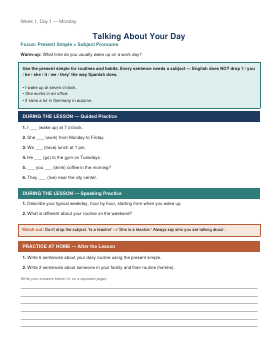
Práctica de presente simple, orden de acciones y concordancia de tercera persona con rutinas cotidianas.

Resumen

Para repasar

  • En inglés cada oración necesita un sujeto: I, you, he, she, it, we o they.
  • El presente simple describe rutinas y hábitos: I wake up at eight.
  • Con he, she e it, el verbo suele llevar -s: She works y My boyfriend wakes up.
  • then ayuda a ordenar acciones: I eat breakfast, and then I go for a walk.

Material

Present_Simple_Subject_Pronouns.pdf fue prometido por Justin al terminar la clase y compartido a las 08:06 del día siguiente. Se verificaron sus 2 páginas y se extrajo texto buscable en artifacts/extracted/.
Materiales de la clase

1 PDF

Notas de repaso

3 notas
  1. Inglés cotidianoCorrige: My boyfriend wake up at 06:30 am.Ver respuestaOcultar respuesta

    Respuesta

    My boyfriend wakes up at 6:30 a.m.

    Por qué
    En tercera persona singular, wake lleva -s: wakes.
    Un ejemplo
    She works in an office.
    Pronunciación
    /maɪ ˈbɔɪˌfrɛnd weɪks ʌp æt sɪks ˈθɝti eɪ ɛm/
    • a1
    • preply
    • present simple
    • routines
  2. Inglés cotidianoTraduce: Me despierto, preparo café y luego trabajo.Ver respuestaOcultar respuesta

    Respuesta

    I wake up, make coffee, and then I work.

    Por qué
    Then conecta acciones en secuencia.
    Un ejemplo
    I wake up at 7 a.m.
    Pronunciación
    /aɪ weɪk ʌp meɪk ˈkɔfi ænd ðɛn aɪ wɝk/
    • a1
    • conversation
    • preply
    • routines
  3. Inglés cotidianoCompleta: ____ works in an office. (ella)Ver respuestaOcultar respuesta

    Respuesta

    She

    Por qué
    She es el pronombre sujeto femenino singular.
    Un ejemplo
    She is a teacher.
    Pronunciación
    /ʃi/
    • a1
    • preply
    • subject pronouns
Practicar tipeando

3 tarjetas para escribir en inglés, letra por letra.

Descargar Anki

6 tarjetas con audio.