 Abrir en Preply
Obligation and necessity
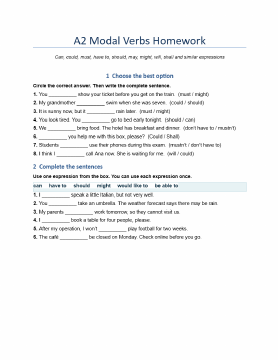
- Practiced sentences with must, mustn't, and have to for rules and duties
- Corrected word order and added 'to' where needed in 'have to' statements
Practicing modal verbs
Con Alianna J.
In this lesson you practiced using modal verbs for obligation, permission, and possibility in short spoken sentences. The tutor guided you through corrections and repetition to make sentences clearer, and you practiced speaking fluently with short role-play prompts.
Modal verbs express necessity, possibility, permission, or ability. 'Must' indicates obligation, 'mustn't' indicates prohibition, 'could' suggests ability or polite request, 'might' indicates possibility, and 'should' gives advice. 'Have to' expresses necessity. Ejemplos
Correcciones, pronunciación y práctica preparadas a partir de esta clase. No las escribió tu profesora.
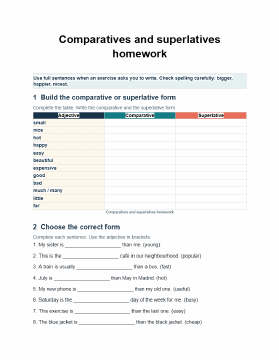
Práctica de obligación, prohibición, consejos, posibilidades y pedidos con modales. La segunda parte también trabajó comparativos y superlativos, documentados en el chat y los PDF aunque el título de Preply solo menciona modales. Se repasaron reflexivos con myself y themselves.
Preply señaló speak, smaller, think y sister. Se conservaron ocho clips, cuatro del habla de la alumna y cuatro de referencia. Para think /θɪŋk/, practicar el aire sin voz entre la lengua y los dientes. Las puntuaciones automáticas no equivalen a una evaluación completa del nivel.
Mensaje de las 13:55: “Deberes: Modals & Comparatives and Superlatives”.
Práctica editorial opcional: pedir que repitan una pregunta, pedir ayuda con una puerta y decir cómo te sentís. Después, comparar dos objetos con una frase breve. No se registran respuestas inventadas ni tareas como completadas.
Semana 6 de A1: habilidades, lugares y necesidades básicas. Priorizar can, pedidos corteses, imperativos y pronunciación. Los comparativos, reflexivos y otros usos de modales de esta clase se conservan como ampliación A2 opcional; no cambian la etapa activa.
Se archivaron cuatro PDF originales (42 páginas en total), inspeccionados visualmente, con texto extraído o transcripción OCR identificada. Los dos deberes son PDF de imágenes; sus originales permanecen intactos. Algunas diapositivas de origen tienen texto de bajo contraste o rótulos superpuestos; no se modificaron.
La grabación completa solo se inventarió, según la política del archivo; no se descargó ni transcribió. Las sugerencias automáticas could/might no son intercambiables en todos los contextos. El resumen distingue lo observado de las correcciones editoriales. No se generó una lección central nueva ni se resolvió la tarea por la alumna.
To experience a physical sensation through touch or bodily perception.
En tu lección
From your lesson: “I am feel weak.”
Otro ejemplo
I can feel the soft fabric of the blanket.
An outer garment with sleeves, worn outdoors for warmth or protection.
En tu lección
From your lesson: “So take a cold. So take a coat.”
Otro ejemplo
She put on her coat before leaving the house.
Able to be used for a practical purpose or in achieving something; serving a function or purpose.
En tu lección
From your lesson: “Useful? Useful?”
Otro ejemplo
This tool is very useful for fixing bikes.
The town or city where a person was born or grew up, or where they feel they belong.
En tu lección
From your lesson: “Can you repeat, please? Hometown?”
Otro ejemplo
She returned to her hometown after many years abroad.
Lacking physical strength or power; not strong in body or muscles.
En tu lección
From your lesson: “I feel weak.”
Otro ejemplo
After being sick for a week, he felt very weak.
To suggest that someone should do something or that something is good or suitable for a particular purpose.
En tu lección
From your lesson: “I shall recommend that.”
Otro ejemplo
I recommend this restaurant for dinner.
Not easy to do, understand, or deal with; requiring effort or skill.
En tu lección
From your lesson: “It difficult? I know.”
Otro ejemplo
The math test was very difficult.
To make a place or thing tidy and free from dirt or mess.
En tu lección
From your lesson: “People must clean up after.”
Otro ejemplo
Please clean up your room before the guests arrive.
A hard or protective covering worn on the head to protect it from injury, especially in activities like riding a bike, playing sports, or working on construction sites.
En tu lección
From your lesson: “You must wear a helmet on this.”
Otro ejemplo
You must wear a helmet when riding a motorcycle.
To gain knowledge or skill in a subject or activity through study, experience, or being taught.
En tu lección
From your lesson: “I have to learn English.”
Otro ejemplo
I want to learn Spanish before my trip.
Las cifras de esta clase, comparadas con todas tus lecciones.
Vocabulario acumulado
1.740 palabras +19 respecto de la clase anterior
Palabras nuevas
19 palabras −34 respecto de la clase anterior
Palabras habladas
405 palabras −762 respecto de la clase anterior
Variedad de vocabulario
7 puntos −12 respecto de la clase anterior
Ritmo al hablar
50 palabras/min −4 respecto de la clase anterior
Tiempo hablando
15 min −13 respecto de la clase anterior
33% del tiempo de conversación
Los comentarios y ejemplos están en inglés estadounidense. Próximamente añadiremos más variantes.
... should speak French ...
Tu pronunciación · 0,4 s
Pronunciación de ejemplo · 0,8 s
Smaller.
Tu pronunciación · 1 s
Pronunciación de ejemplo · 0,9 s
I think it's table.
Tu pronunciación · 0,8 s
Pronunciación de ejemplo · 0,7 s
My sister should ...
Tu pronunciación · 1 s
Pronunciación de ejemplo · 0,8 s
Dijiste
...You should go to the Oktoberfest.
Excellent use of modal verbs! Keep up the great work.
Dijiste
...I have to learn English.
Great job with expressing obligation! You're doing wonderfully.
Dijiste
...It might be cold tonight.
Fantastic use of modal verbs to express possibility! Keep up the good work.
Dijiste
...If you drink alcohol, you must drive a car.
Una alternativa
If you drink alcohol, you must not drive.
Added negation to reflect the intended safety/legal requirement (don’t drive after drinking).
Dijiste
...My sister should speak French when she was eight.
Una alternativa
My sister could speak French when she was eight.
Replaced modal "should" with "could" to indicate past ability rather than advice.
Dijiste...You should go to the Oktoberfest.
ProbáYou ought to go to the Oktoberfest.
Has utilizado la palabra 'should' en esta frase. ¡Considera la posibilidad de utilizar el término 'ought to' para enriquecer tu vocabulario!
Dijiste...I could play.
ProbáI might play.
Has utilizado la palabra 'could' en esta frase. ¡Considera la posibilidad de utilizar el término 'might' para enriquecer tu vocabulario!
Dijiste...It might be cold tonight.
ProbáIt could be cold tonight.
Has utilizado la palabra 'might' en esta frase. ¡Considera la posibilidad de utilizar el término 'could' para enriquecer tu vocabulario!
Respuesta
I feel weak.
Respuesta
Can you repeat that, please?
Respuesta
I have to learn English.
Respuesta
Take a coat.
Respuesta
think
Respuesta
busier
Respuesta
smaller than my phone
Respuesta
This app is more useful.
Respuesta
I look at myself in the mirror.
Respuesta
Please clean up after yourself.
Respuesta
Could you help me, please?
Respuesta
You must not touch this.
12 tarjetas para escribir en inglés, letra por letra.
24 tarjetas con audio.