 Abrir en Preply
Weekend plans and travel
- Discussed your boyfriend's trip and his return on Sunday
- Practiced saying future plans: 'We are going to travel to Argentina'
- Clarified trip length: 'the flight is fourteen hours'
Conversación sobre planes, viajes, horarios y rutinas, con práctica de expresiones con go y get. La tutora escribió theater y el patrón it takes me ... to get to the airport. Los insights recogen peticiones, llegada a lugares, cambios de estado y hábitos.
Daily plans and travel
Con Alianna J.
In this lesson you practiced talking about weekend plans, travel arrangements and daily routines. You focused on using common phrases with 'get' and simple past/time expressions, while the tutor corrected pronunciation and sentence order throughout.
The present simple tense is used to describe habitual actions or general truths. The base verb is used for plural subjects and 'I', while third person singular adds an 's' or 'es'. Ejemplos
The past simple tense is used to describe completed actions in the past. Regular verbs add -ed, irregular verbs have unique forms. Ejemplos
'Will' is used for decisions made at the moment or definite future actions. 'Going to' is used for planned future actions or intentions. Ejemplos
Correcciones, pronunciación y práctica preparadas a partir de esta clase. No las escribió tu profesora.
La semana 7 del plan sigue siendo evaluación A1. Las tarjetas refuerzan vocabulario, pronunciación y expresiones breves; las tareas A2 se conservan como fueron asignadas, sin promover automáticamente el nivel ni modificar el perfil personal.
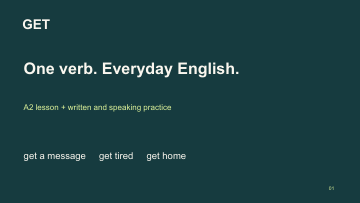
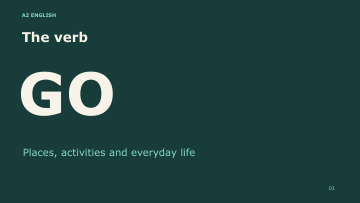
It takes me ten minutes to get to the airport: patrón para expresar duración; el tiempo de diez minutos es un ejemplo de la clase, no un dato personal verificado.Get home, sin to; get to the airport, con to.Get dressed significa vestirse; get better expresa una mejora.Reply /rɪˈplaɪ/ y replay no significan lo mismo; warm tampoco es worm.My boyfriend went abroad y Next week I'm traveling... aparecen como correcciones de pasado y planes. Se archivan, sin añadir gramática obligatoria a la evaluación A1.Nullimo y daily pass every year no permite recuperar con seguridad el sentido original. No se convierte en tarjeta.We got hungry after that no es concluyente: el material dice after our walk. Se conserva la evidencia, sin afirmar un error de la alumna a partir del fragmento.A las 16:20 se enviaron los PDF GO_uses_A2_-_Google_Slides (24 páginas) y GET_uses_A2_-_Google_Slides (25 páginas). Se inspeccionaron todas las páginas y se extrajo texto. Son diapositivas de explicación y práctica de clase; GET también contiene respuestas. Permanecen como material de apoyo, sin duplicar sus ejercicios en los formularios de tarea. Se preservan los PDF originales y su extracción sin reconstruirlos.
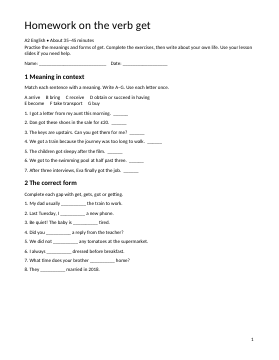
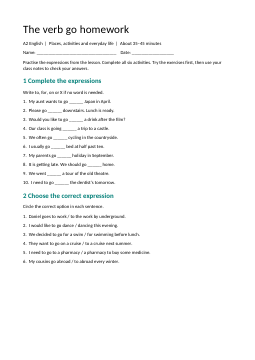
A las 16:29 se enviaron A2_Go_Homework.docx y A2_Get_Homework.docx. Ambos originales se conservan con sus checksums y texto extraído. Los PDF go-homework-converted-from-docx.pdf y get-homework-converted-from-docx.pdf son conversiones locales de tres páginas cada una, inspeccionadas visualmente y documentadas en artifacts/extracted/document-conversions.md.
Los formularios homework/go.json y homework/get.json contienen las seis secciones de cada hoja, sin soluciones ni respuestas personales. La asociación A–G de GET conserva las letras y sus huecos; las opciones de GO se presentan como selección. El relato de GO conserva los ocho números dentro de un solo ítem. Las consignas finales piden 60–80 palabras; el subrayado puede realizarse en el original. No se encontró fecha de entrega.
A card, typically rectangular, for sending a message by mail without an envelope, often with a picture on one side.
En tu lección
From your lesson: “See, I got a post postcard from my cousin.”
Otro ejemplo
I sent my friend a postcard from Paris.
A building or outdoor area where plays, movies, or other performances are presented to an audience.
En tu lección
From your lesson: “Okay. Let's get a taxi to the Theater Theater. Come on. Theater.”
Otro ejemplo
We went to the theater to see a new play.
Having a husband or wife; joined in marriage.
En tu lección
From your lesson: “Get married. Married. Become someone's husband or wife.”
Otro ejemplo
She is married to a doctor.
To improve in health, condition, or quality after being worse or sick.
En tu lección
From your lesson: “Get better, improve, feed less.”
Otro ejemplo
She started to get better after taking the medicine.
A spoken or written answer to a question, request, or comment.
En tu lección
From your lesson: “I got a reply from the hotel. Replay. Oh, replay.”
Otro ejemplo
She sent a reply to his email.
Feeling or producing a sensation of heat or comfort.
En tu lección
From your lesson: “It's getting warm. Warm. Worm. Oh, how is”
Otro ejemplo
Her hands felt warm after holding the mug.
Used to indicate that one thing is done or chosen as a substitute or replacement for another.
En tu lección
From your lesson: “We got the bus instead of walking. Instead of instead of okay.”
Otro ejemplo
She drank tea instead of coffee this morning.
A public place or building where people buy and sell goods, especially food.
En tu lección
From your lesson: “Okay. See, I got this jacket at the market, both.”
Otro ejemplo
I go to the market every Saturday to buy fresh vegetables.
Feeling the need or desire to eat food.
En tu lección
From your lesson: “We got hungry after our our what? Walk.”
Otro ejemplo
I am hungry after skipping breakfast.
To go from one place to another, typically over a distance, for any purpose such as work, leisure, or exploration.
En tu lección
From your lesson: “We are going traveling.”
Otro ejemplo
I love to travel to new countries every year.
An official document or stamp in a passport that allows someone to enter, leave, or stay in a country for a specific period of time.
En tu lección
From your lesson: “For three months, for this tourist visit a visa.”
Otro ejemplo
She applied for a tourist visa to visit France.
Difficult to understand, explain, or deal with due to complexity.
En tu lección
From your lesson: “I don't know. It's complicated.”
Otro ejemplo
His relationship with his parents is complicated.
As a substitute or alternative; in place of someone or something else.
En tu lección
From your lesson: “We got the bus instead of walking.”
Otro ejemplo
She wanted tea but had coffee instead.
Las cifras de esta clase, comparadas con todas tus lecciones.
Vocabulario acumulado
1.908 palabras +34 respecto de la clase anterior
Palabras nuevas
34 palabras −13 respecto de la clase anterior
Palabras habladas
864 palabras +206 respecto de la clase anterior
Variedad de vocabulario
14 puntos +3 respecto de la clase anterior
Ritmo al hablar
73 palabras/min +16 respecto de la clase anterior
Tiempo hablando
21 min −3 respecto de la clase anterior
42% del tiempo de conversación
Los comentarios y ejemplos están en inglés estadounidense. Próximamente añadiremos más variantes.
E Reply.
Tu pronunciación · 0,8 s
Pronunciación de ejemplo · 0,9 s
It's complicated.
Tu pronunciación · 0,5 s
Pronunciación de ejemplo · 1,1 s
... good market.
Tu pronunciación · 0,9 s
Pronunciación de ejemplo · 0,8 s
I think so.
Tu pronunciación · 0,4 s
Pronunciación de ejemplo · 0,7 s
Dijiste
...I got a reply from the hotel.
Excellent work with prepositions! You're clearly showing the source of the reply.
Dijiste
...I woke up at eleven.
Excellent use of the past simple tense! You're clearly communicating when actions happened.
Dijiste
...I usually go to bed before midnight.
Well done with adverbs of frequency! You're clearly expressing habits.
Dijiste
...We got the bus instead of walking.
Great use of 'instead of'! You're effectively showing alternatives.
Dijiste
...Let's go dancing on Saturday.
Excellent use of the gerund after 'go'! You're expressing activities perfectly.
Dijiste
...My boyfriend travel or was Broad.
Una alternativa
My boyfriend went abroad.
Corrected verb tense and replaced incorrect word "Broad" with "abroad".
Dijiste
...In Nullimo, some gets per day card every year.
Una alternativa
In Nullimo, some people get a daily pass every year.
Added "people", corrected verb form and replaced awkward "per day card" with "daily pass".
Dijiste
...Elena got a new job from found a job.
Una alternativa
Elena found a new job.
Removed redundancy and used the correct verb to express finding employment.
Dijiste
...We got hungry after our what.
Una alternativa
We got hungry after that.
Replaced unclear "what" with "that" to make the meaning clear.
Dijiste
...The next week, I travel with my boyfriend to Argentina.
Una alternativa
Next week I'm traveling to Argentina with my boyfriend.
Adjusted tense and word order for a natural future arrangement and more fluent wording.
Dijiste...The plates are in the kitchen.
ProbáThe dishes are in the kitchen.
Has utilizado la palabra 'plates' en esta frase. ¡Considera la posibilidad de utilizar el término 'dishes' para enriquecer tu vocabulario!
Dijiste...I'll get you a blanket.
ProbáI'll bring you a blanket.
Has utilizado la palabra 'get' en esta frase. ¡Considera la posibilidad de utilizar el término 'bring' para enriquecer tu vocabulario!
Dijiste...Let's get a taxi to the Theater.
ProbáLet's get a cab to the Theater.
Has utilizado la palabra 'taxi' en esta frase. ¡Considera la posibilidad de utilizar el término 'cab' para enriquecer tu vocabulario!
Respuesta
It takes me ten minutes to get to the airport.
Respuesta
theater
Respuesta
reply
Respuesta
The market is nearby.
Respuesta
warm
Respuesta
I get dressed in the morning.
Respuesta
I get home at six.
Respuesta
I think so.
8 tarjetas para escribir en inglés, letra por letra.
16 tarjetas con audio.